
As we age, the thymus — an organ that produces new T cells — gradually becomes less active, contributing to a decline in immune function. This study clarifies how to identify newly formed T cells in humans and tracks how these cells change over a lifetime.
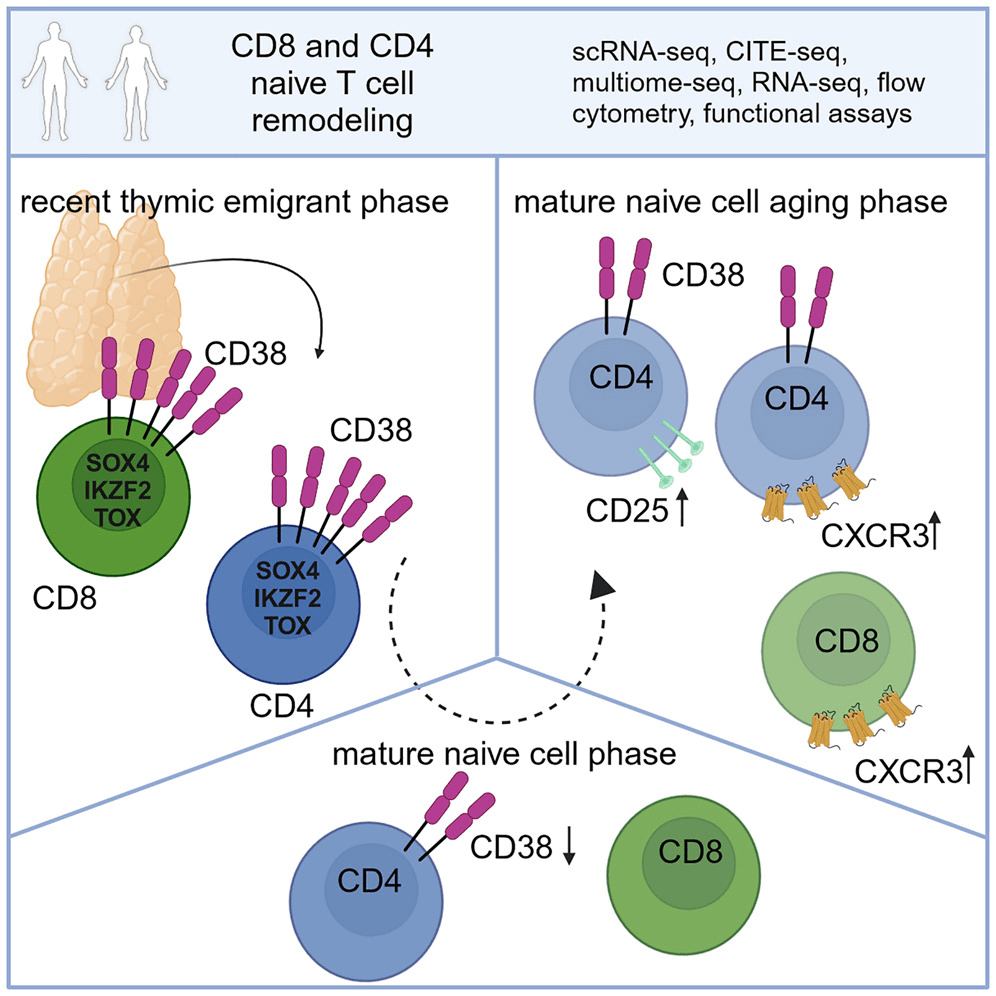
Using advanced single-cell technologies, the researchers discovered reliable markers that distinguish newly produced T cells from older ones, showing that high levels of the surface protein CD38 consistently identify these “recent thymic emigrants (RTE).” By analyzing immune cells from 158 individuals, the study reveals how aging reshapes the pool of naïve T cells, including shifts in gene activity and immune signaling.
To strengthen these findings, our research group contributed a unique neonatal thymectomy dataset, helping the consortium directly link thymic function and identification of RTE.
 T:B Cell lab
Leave a comment